
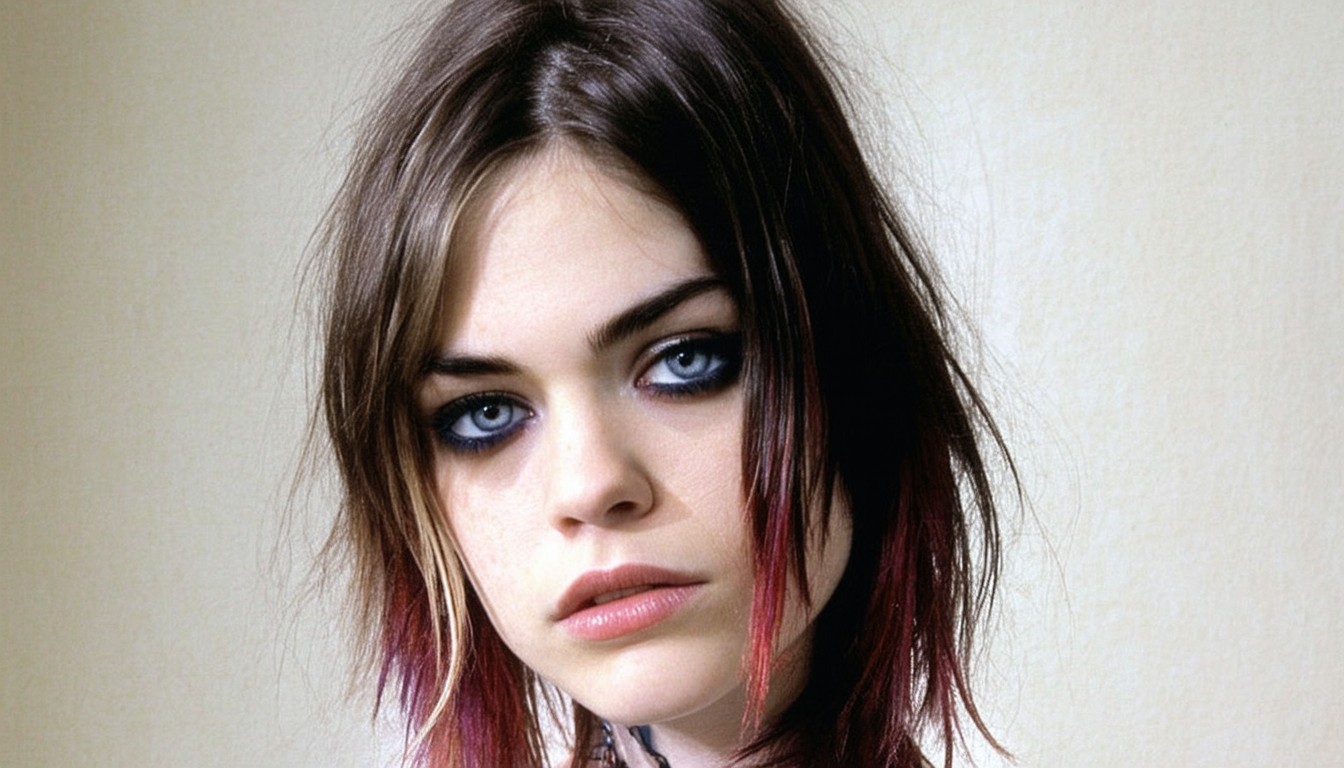
Few names in popular culture carry as much weight as “Cobain.” For Frances Bean Cobain, daughter of Nirvana frontman Kurt Cobain and singer Courtney Love, this legacy has shaped her life in profound and public ways. Born in 1992, Frances entered the world under the spotlight, her existence entwined with both tragedy and myth. Unlike many children of rock royalty, Frances has managed to carve out her own path—one grounded in visual art, careful self-preservation, and selective public engagement. Her journey offers a compelling look at how legacy, trauma, and creative individualism can coexist, evolve, and ultimately empower.
Frances Bean Cobain was born on August 18, 1992, into circumstances few could envy. Her father’s meteoric rise with Nirvana had already ignited a cultural movement, and her mother’s career with Hole was equally steeped in media fascination and controversy. The challenges began almost immediately; allegations of substance abuse by both parents were widely reported, leading briefly to Frances’s temporary removal from their custody as an infant.
Despite being shielded from direct media exposure during her earliest years, Frances became the unwilling symbol of Generation X’s lost innocence. Journalists and fans alike speculated about the wellbeing of “the Nirvana baby,” especially after the tragic death of Kurt Cobain in 1994, when Frances was just 20 months old. She would spend much of her childhood navigating the repercussions of that loss, all while the shadow of fame hovered over her every move.
Growing up without her father, Frances was primarily raised by her mother, with stretches spent in the care of her paternal grandmother and other guardians during tumultuous periods in Courtney Love’s life. Throughout adolescence, Frances expressed an ambivalence toward her family’s legacy. Instead of pursuing music, she gravitated toward visual arts and fashion, distancing herself from the expectations set by her last name.
Her first public appearances were carefully managed, with Frances attending private schools and selectively engaging with media. When she did address the public, it was often with remarkable candor. In a rare interview with Rolling Stone in 2015, Frances Bean Cobain reflected on her father’s influence:
“He got to the point where he had to sacrifice every bit of who he was to his art, because the world demanded it of him. I don’t think he had the tools to cope with that. And I think that’s really tragic.”
This quote encapsulates Frances’s nuanced understanding of fame and loss, highlighting empathy without romanticizing the self-destructive elements of her father’s story.
Unlike many celebrity offspring who follow in their parents’ musical footsteps, Frances found her calling in the visual arts. By her late teens, she was exhibiting surreal, emotionally charged works under pseudonyms, such as “Fiddle Tim” and later her own name. Her art often explores themes of identity, mortality, and the distortions of celebrity—reflecting both personal catharsis and cultural critique.
In 2012, she staged her first solo exhibition, “Scumf*ck,” at the Los Angeles-based gallery La Luz de Jesus. Industry observers noted the maturity and darkness of her pieces, which use mixed media and unsettling imagery to question the illusions of beauty and fame. Subsequent exhibitions have seen Frances’s work evolve in style but remain uncompromising in intent.
Frances has also ventured into fashion, notably modeling for designers like Hedi Slimane and Marc Jacobs. Her presence in these projects is symbolic of a broader shift: rather than fame for fame’s sake, Frances exercises agency over how she is seen and by whom. Each project is carefully curated, ensuring her narrative remains hers to own.
Further, as co-manager of her father’s estate—a role she assumed at age 18—Frances oversees not just the financial elements but the ongoing stewardship of Kurt Cobain’s public memory. This responsibility has at times placed her back in the eye of media storms, especially in disputes over Nirvana’s legacy.
Behind the headlines and gallery openings, Frances’s life has included personal struggles. She married musician Isaiah Silva in 2014, but the marriage ended in a contentious divorce and led to public disputes over precious family memorabilia. The legal wrangling frequently made headlines, amplifying the challenges of simply living a private life in a public eye.
In addition to navigating her mother’s highly scrutinized ups and downs, Frances has spoken about her own mental health journey. Her openness about therapy, boundaries, and self-care distinguishes her from previous generations of celebrity offspring. In interviews, she has emphasized her preference for a quiet, grounded existence—valuing work, recovery, and genuine connection over the trappings of fame.
Unlike many of her peers, Frances approaches social media with restraint, using platforms like Instagram primarily to showcase her art and advocate for causes related to mental health and individuality. Her posts are often introspective, laced with humor, humility, and a dose of lighthearted sarcasm. This approach resonates with a younger generation’s appetite for authenticity, as well as with Nirvana’s original ethos of rejecting commercial compromise.
As the primary heir to Kurt Cobain’s estate—which includes not just royalties, but publishing rights and artistic material—Frances holds a unique position in shaping how her father is remembered. She has been outspoken about separating myth from reality, striving to present a picture of Kurt as a human being, not simply a tragic rock icon.
A defining moment was her role as executive producer of the 2015 documentary “Kurt Cobain: Montage of Heck.” The film, which combined interviews, family archives, and Cobain’s own journals, was lauded for its vulnerability and complexity. Frances’s influence was evident in its refusal to gloss over her father’s flaws or pain, instead painting a portrait that was deeply personal and unvarnished.
“It’s important to show that he was not a god,” said Frances in media interviews promoting the project. “He was a real person who struggled, who had moments of happiness and who gave a lot to the world, even when it cost him dearly.”
By taking this balanced approach, Frances has not only honored her father’s artistic contributions but also helped open up broader conversations about mental health, addiction, and the cost of creativity.
Frances Bean Cobain’s journey is defined by paradox and perseverance. Under relentless public gaze, she has transformed inherited trauma into art, sorrow into advocacy, and family myth into individual meaning. While she continues to evolve as an artist and steward of her parents’ complicated legacies, her greatest achievement may be the example she sets—a model of living with intention, on her own terms, in a world all too eager to turn stories into legends.
Frances Bean Cobain was born on August 18, 1992, making her 31 years old as of 2024.
No, Frances Bean Cobain has distinguished herself as a visual artist rather than a musician, focusing on drawing, painting, and mixed media projects.
She is the primary heir and helps manage the estate of Kurt Cobain, including decision-making on releases, rights, and media portrayals related to her father.
Yes, she served as executive producer for “Kurt Cobain: Montage of Heck,” a documentary providing an intimate look into her father’s life.
While she maintains an Instagram account, Frances uses it mainly to share her artwork and raise awareness about personal and mental health issues, rather than seeking broad fame.
Yes, her life has included both public and private challenges, notably a contentious divorce and various disputes regarding her late father’s memorabilia and legacy. She has addressed these issues with openness about the importance of mental health and personal boundaries.
